Summary of Chapter 3: Authoritarian High Modernism
This chapter introduces the concept of “High Modernism” which will be explored through subsequent chapters.
All the state simplifications that we have examined have the character of maps. That is, they are designed to summarize precisely those aspects of a complex world that are of immediate interest to the mapmaker and to ignore the rest. (87)
Yet they not only summarize facts, they transform them in portraying them; not just description, but prescription:
The state has no monopoly on utilitarian simplifications. What the state does at least aspire to, though, is a monopoly on the legitimate use of force. That is surely why, from the seventeenth century until now, the most transformative maps have been those invented and applied by the most powerful institution in society: the state. (87-8)
This had to wait until the mid-19th to 20th century, when state power grew to match its ambitions. “I believe that many of the most tragic episodes of state development in the late nineteenth and twentieth centuries originate in a particularly pernicious combination of three elements” (88). These are:
1. “the aspiration to the administrative ordering of nature and society”. S terms this high modernism (after Harvey), an ideology shared by both right and [statist] left.
2. “the unrestrained use of the power of the modern state as an instrument for achieving these designs.” (88-9)
3. “a weakened or prostrate civil society that lacks the capacity to resist these plans”
The ideology of high modernism provides, as it were, the desire; the modern state provides the means of acting on that desire; and the incapacitated civil society provides the leveled terrain on which to build (dis)utopias. (89)
S sees Nazism as a reactionary form of Modernism. He discusses “progressive” variants of High Modernism:
Where the utopian vision goes wrong is when it is held by ruling elites with no commitment to democracy or civil rights and who are therefore likely to use unbridled state power for its achievement. Where it goes brutally wrong is when the society subjected to such utopian experiments lacks the capacity to mount a determined resistance.
A section on “the discovery of society” (90ff) details the role of the social sciences; S quotes Condorcet on the “moral sciences,” which are to be modeled after the physical sciences.
One essential precondition of this transformation was the discovery of society as a reified object that was separate from the state and that could be scientifically described. (91)
The development of statistics:
The existing social order, which had been more or less taken by earlier states as a given, reproducing itself under the watchful eye of the state, was for the first time the subject of active management. It was possible to conceive of an artificial, engineered society designed, not by custom and historical accident, but according to conscious, rational, scientific criteria. (92)
There is a link between class control, and colonialism, in this project:
It is important to recognize that, among Western powers, virtually all the initiatives associated with the “civilizing missions” of colonialism were preceded by comparable programs to assimilate and civilize their own lower-class populations, both rural and urban. The difference, perhaps, is that in the colonial setting officials had greater coercive power over an objectified and alien population, thus allowing for greater feats of social engineering. (378n19)
The difficulty with this resolution is that state social engineering was inherently authoritarian. In place of multiple sources of invention and change, there was a single planning authority; in place of the plasticity and autonomy of existing social life, there was a fixed social order in which positions were designated. (93)
In the 20th century, industrial warfare and the response to the Depression both required a more thorough mobilization of society; as did the rebuilding of post-war states. Beyond this, both revolutionary and colonial societies exerted special concentrated power [meeting the three criteria listed above].
The “birth” of 20th-Century High Modernism can be located in post-WWI Germany, under Walter Rathenau, who was motivated in part by his belief in productivism:
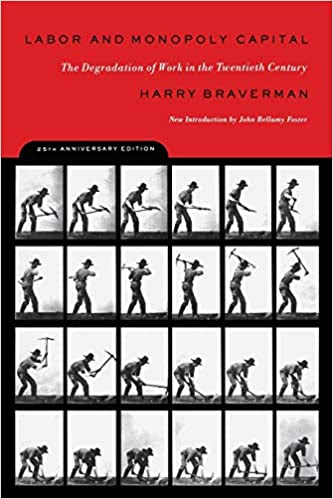
For many specialists, a narrow and materialist “productivism” treated human labor as a mechanical system which could be decomposed into energy transfers, motion, and the physics of work. The simplification of labor into isolated problems of mechanical efficiencies led directly to the aspiration for a scientific control of the entire labor process. (98)
Productivism had two lineages: 1) Taylorism; 2) the European school of “energetics.” S quotes Rabinbach (from the Human Motor book) on the point that productivism is “politically promiscuous,” embraced by both left and right (99). Productivism is a technological fix for class struggle; for capitalists, enabling control of worker; for the statist left, the elimination of capitalist management:
For much of the left, productivism promised the replacement of the capitalist by the engineer or by the state expert or official. It also proposed a single optimum solution, or ‘best practice,’ for any problem in the organization of work. The logical outcome was some form of slide-rule authoritarianism in the interest, presumably, of all.
Scott lists Thorstein Veblen, Sinclair Lewis, and Ayn Rand as all very different expounders of this ideology.
The world war was the high-water mark for the political influence of engineers and planners. Having seen what could be accomplished in extremis, they imagined what they could achieve if the identical energy and planning were devoted to popular welfare rather than mass destruction. (100)
Lenin was impressed with Rathenau’s example, and with Taylorism:
A command economy at the macrolevel and Taylorist principles of central coordination at the microlevel of the factory floor provided an attractive and symbiotic package for an authoritarian, high-modernist revolutionary like Lenin. (101)
S ends with three sources of resistance to “the authoritarian temptations of twentieth-century high modernism” in liberal democracies:
1. The “existence and belief in a private sphere of activity in which the state and its agencies may not legitimately interfere.” Scott notes that such private spheres have been much eroded, but the idea that there is a proper outside to the control of the state still forms a limit.
2. The “private sector in liberal political economy;” this is thought to be outside the capacity of the state to recreate or master, and thus limits the state’s “economic sovereignty” [quoting from The Foucault Effect].
3: Most importantly, democratic institutions and liberal freedoms; “the existence of working, representative institutions through which a resistant society could make its influence felt” (102), and thus limit the power of elites and bureaucrats.