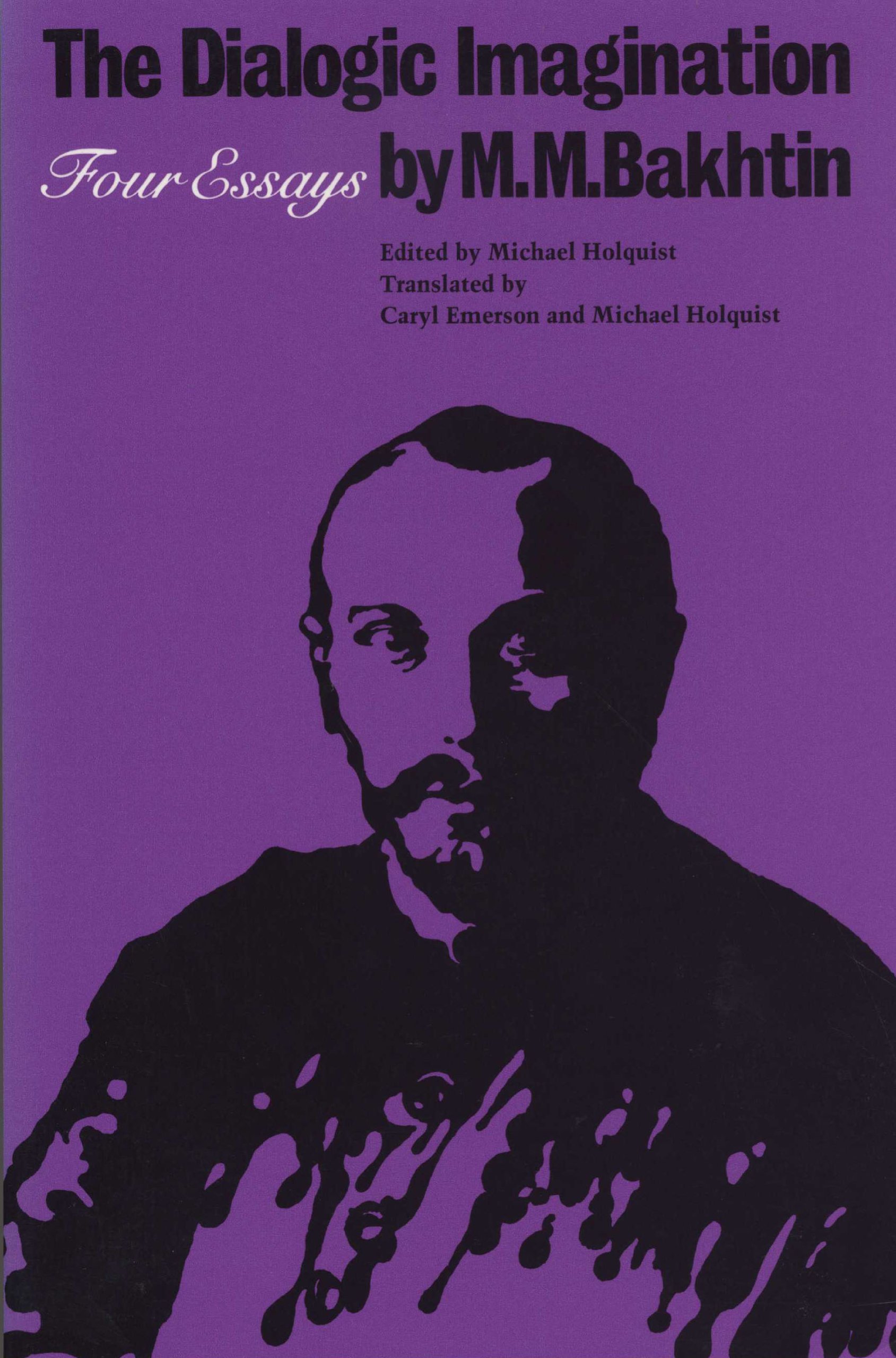
Wednesday, June 15, 2022

Post-Scarcity Anarchism, Chapter 3


Summary of Chapter 3: Towards a Liberatory Technology


In this third chapter he lays out the third part of his overall platform, detailing the way that technology will be embraced, but used differently, in a revolutionary post-scarcity society. Despite various criticisms that could be made of Bookchin’s romanticism, naturalization, etc., it seems likely that any actually successful, sustainable, egalitarian society of the future will bear a good deal of resemblance to his vision.

According to Bookchin, people used to fetishize technological progress, but now there is a "schizoid" mentality: people fear it on the one hand (apocalyptically) but at the same time desire its benefits with a “a yearning for material abundance, leisure and security” (107). There is also a schizoid aspect to technology, producing both helpful and disastrous technologies and inventions: “The bomb is pitted against the power reactor.” Bookchin says the fear side is winning out: “technology is viewed as a demon, imbued with a sinister life of its own, that is likely to mechanize man if it fails to exterminate him” (108). This is dangerous:

There is a very real danger that we will lose our perspective toward technology, that we will neglect its liberatory tendencies, and, worse, submit fatalistically to its use for destructive ends.

A balance must be struck:

The purpose of this article is to explore three questions. What is the liberatory potential of modern technology, both materially and spiritually? What tendencies, if any, are reshaping the machine for use in an organic, human-oriented society? And finally, how can the new technology and resources be used in an ecological manner—that is, to promote the balance of nature, the full development of natural regions, and the creation of organic, humanistic communities?

He argues against deterministic views, which cast technology as inherently liberatory, or as inherently dehumanizing (citing Juenger and Ellul on the second point). 

An organic mode of life deprived of its technological component would be as nonfunctional as a man deprived of his skeleton. Technology must be viewed as the basic structural support of a society; it is literally the framework of an economy and of many social institutions. (109)

He notes 1848 as a key year with the Communist Manifesto as a statement of revolutionary theory, the workers' uprising, and being at about the “culmination” of steam technology that had started a century and a half earlier; both the potential, and the limitations of 19th century technology had an influence on 19th century revolutionary thought, as evidenced by M&E's manifesto. One inherent shortcoming of this is that said technology had not yet reached the potential for post-scarcity, that, according to Bookchin, is the real precondition for revolution:

However glowing and lofty were the revolutionary ideals of the past, the vast majority of the people, burdened by material want, had to leave the stage of history after the revolution, return to work, and deliver the management of society to a new leisured class of exploiters. Indeed, any attempt to equalize the wealth of society at a low level of technological development would not have eliminated want, but would have merely made it into a general feature of society as a whole, thereby recreating all the conditions for a new struggle over the material things of life, for new forms of property, and eventually for a new system of class domination.  (111)

[He cites M&E to the same effect just below this. I'm not sure the argument (regarding the conditions of want becoming “a general feature of society” after a revolution with industrial-era technology) has merit. But he is basically talking about why and how M&E differ from his own analysis, because of the different technological development of their day: enough to deliver some promise, but not enough to deliver the truly revolutionary promise of the post-scarcity society].

The fact that men would have to devote a substantial portion of their time to toil, for which they would get scant returns, formed a major premise of all socialist ideology—authoritarian and libertarian, Utopian and scientific, Marxist and anarchist.

The problem of dealing with want and work—an age-old problem perpetuated by the early Industrial Revolution- produced the great divergence in revolutionary ideas between socialism and anarchism. (112)

Marx pursued the compromise of a worker-run state; Bakunin and Kropotkin argued for tradition, social pressure, or moral instinct to mutual aid as their hope for a state free society. According to Bookchin, the former compromise made Marxism by the 20th century no better than mainstream capitalist doctrines, while the anarchists back in the time of scarcity had been admirable idealists, but ultimately mere impractical idealists, all the same [he will argue that post-scarcity changes the equation: anarchism is now practical rather than merely idealistic.]

Bookchin discusses how the USSR promoted the ideal of workers and full employment, everyone working hard. Bookchin, in contrast, sees the importance of distinguishing between “pleasurable work” and “onerous toil” (114) and wants to get rid of the toil aspect. By Bookchin’s time of writing (1965), the possibility of a world without toil has become obvious. He notes, and dismisses, contemporary calls for an annual guaranteed income, as being stuck in the quantitative thinking of a scarcity society, instead of being open to the qualitative thinking of a post-scarcity society. In an important footnote, he delineates a distinction between “justice” (quantitative, scarcity-era thinking) and “freedom” (qualitative, post-scarcity thinking):

An exclusively quantitative approach to the new technology, I may add, is not only economically archaic, but morally regressive. This approach partakes of the old principle of justice, as distinguished from the new principle of freedom. Historically, justice is derived from the world of material necessity and toil; it implies relatively scarce resources which are apportioned by a moral principle which is either “just” or “unjust.” Justice, even “equal” justice, is a concept of limitation, involving the denial of goods and the sacrifice of time and energy to production. Once we transcend the concept of justice—indeed, once we pass from the quantitative to the qualitative potentialities of modern technology—we enter the unexplored domain of freedom, based on spontaneous organization and full access to the means of life. (116)

[The links between justice and scarcity, and freedom and post-scarcity, are worthy of being further explored. On the one hand this is a poignant critique of the current fervor for “social justice” which often relies on appeals to a redistributive state. On the other hand, we currently do still live in a situation of scarcity, not just of material wealth but in which political power is unevenly distributed (and thus scarce for the many). To argue in this context for a politics of freedom rather than justice may be equivalent to taking the position of the abstract (privileged, white, male, etc.) subject, not recognizing that the conditions for this freedom and equality have yet to be achieved for most people.]

Bookchin lists the new questions he wants to pose about technology:

Is this technology staking out a new dimension in human freedom, in the liberation of man? Can it not only liberate man from want and work, but also lead him to a free, harmonious, balanced human community—an ecocommunity that would promote the unrestricted development of his potentialities? Finally, can it carry man beyond the realm of freedom into the realm of life and desire? (116-7)

For the first time in history, technology has reached an open end. The potential for technological development, for providing machines as substitutes for labor is virtually unlimited. Technology has finally passed from the realm of invention to that of design—in other words, from fortuitous discoveries to systematic innovations.

Because the problem is no longer dealing with scarcity, technology has “reached an open end” with new unlimited potential; the realm of “invention” has been replaced by the realm of “design,” by which he means that we have gone “from fortuitous discoveries to systematic innovation” building off an existing system. He quotes Vannevar Bush on this [which is funny because I was just reading Wiener talking about how he gave Bush ideas for computers, etc. Interestingly Bush’s illustration of such “systematic design” is about how to design a car that would follow a white line down a road, and the answer is basically a "breadboard model" with sensors and actuators, basically an arduino!] Bush's point is that there is a host of reliable gadgets to be called upon, and of "men who understand fully all their queer ways" (118). Nothing would really have to be invented, just assembled, because we have achieved a platform or system for easy and quick innovation in the future [also presumably better directed than under the capitalist system, which subordinates technological progress to the demands of profit.]

Bookchin pulls two points out of Bush's story: "the two most important features of the new, so-called "second," industrial revolution," [again echoing Wiener]:

[1] the enormous potentialities of modern technology and

[2] the cost-oriented, nonhuman limitations that are imposed upon it.

The second is the profit motive under capitalism, and is a constraint upon innovation.

Perhaps the most obvious development leading to the new technology has been the increasing interpenetration of scientific abstraction, mathematics and analytic methods with the concrete, pragmatic and rather mundane tasks of industry. This order of relationships is relatively new. Traditionally, speculation, generalization and rational activity were sharply divorced from technology. This chasm reflected the sharp split between the leisured and working classes in ancient and medieval society. (118)

[This is interesting as both Wiener and Braverman have been making this point, but here Bookchin is much closer to Wiener’s analysis than to Braverman's, or at least so far]

In our own day this synthesis, once embodied by the work of a single, inspired genius, is the work of anonymous teams. Although these teams have obvious advantages, they often have all the traits of bureaucratic agencies—which leads to a mediocre, unimaginative treatment of problems. (119) 

Bookchin notes that a lot of industrial growth is not due to mechanization but to the "continual reorganization of the labor process," here sounding increasingly like Braverman:

Historically, it would be difficult to understand how mechanized mass manufacture emerged, how the machine increasingly displaced labor, without tracing the development of the work process from craftsmanship, where an independent, highly skilled worker engages in many diverse operations, through the purgatory of the factory, where these diverse tasks are parceled out among a multitude of unskilled or semiskilled employees, to the highly mechanized mill, where the tasks of many are largely taken over by machines manipulated by a few operatives, and finally to the automated and cybernated plant, where operatives are replaced by supervisory technicians and highly skilled maintenance men.

And then like Marx:

the machine has evolved from an extension of human muscles into an extension of the human nervous system. (119-20)

The mechanical devices and engines developed during the eighteenth and nineteenth centuries did not replace human muscles but rather enlarged their effectiveness. Although the machines increased output enormously, the worker's muscles and brain were still required to operate them, even for fairly routine tasks. (120)

The development of fully automatic machines for complex mass-manufacturing operations requires the successful application of at least three technological principles: such machines must have a built-in ability to correct their own errors; they must have sensory devices for replacing the visual, auditory and tactile senses of the worker; and, finally, they must have devices that substitute for the worker's judgment, skill and memory.

In other words, [feedback], sensors, and knowledge; this could be contrasted with Wieners account. Bookchin gives examples of feedback  mechanisms, distinguishing between “closed” (controlled by feedback) vs. “open” (manually controlled) systems; sensors can be used to turn open systems into closed ones, thus reducing the need for human labor (122). He brings up digital computers, and looks at the impact of automation in an automobile factory: there is a great increase in speed, along with a reduction in the number of needed workers; but even the current system is quickly out of date as new speeds are reached.

[So far a difference between Bookchin and Braverman is that Braverman has asked what the development of technology would be like in a worker-centric or controlled system – how this would lead to technological development that was not an attempt to control or limit workers’ power and knowledge, skill, etc. and thus would presumably not have led to the split between  managerial/technical knowhow and brute, repetitive labor. Bookchin, in contrast, takes this separation for granted, because he is not talking about what a system would look like that had been shaped all along by anti-authoritarianism, but rather how an anti-authoritarian or anarchist society could result now, only just now having been made possible, after the fact of having gone through this capitalist development (Bookchin is thus closer to Marx here).]

Among the many parallels in this chapter with the recent chapter of Wiener, labor in mines is given as a standard of the most grueling kind of work:

If it is true that the moral level of a society can be gauged by the way it treats women, its sensitivity to human suffering can be gauged by the working conditions it provides for people in raw materials industries, particularly in mines and quarries. (125)

He quotes Mumford on the mine as the first artificial environment, where work is divorced from the day and night cycle:

The abolition of mining as a sphere of human activity would symbolize, in its own way, the triumph of a liberatory technology. That we can point to this achievement already, even in a single case at this writing, presages the freedom from toil implicit in the technology of our time. (126)

[Bookchin here echoes Wiener's discussion or rather example of mining as a good kind of work to get rid of; however he seems not to be taking Mumford’s point about mining as the birthplace of a certain organization or way of thinking about and imposing work discipline.] 

His vision of small, local, distributed factories, produced with that plug-in breadboard-like “design not invention” principle of shared knowledge and tech: 

It is easy to foresee a time, by no means remote, when a rationally organized economy could automatically manufacture small "packaged" factories without human labor; parts could be produced with so little effort that most maintenance tasks would be reduced to the simple act of removing a defective unit from a machine and replacing it by another—a job no more difficult than pulling out and putting in a tray. Machines would make and repair most of the machines required to maintain such a highly industrialized economy. Such a technology, oriented entirely toward human needs and freed from all consideration of profit and loss, would eliminate the pain of want and toil—the penalty, inflicted in the form of denial, suffering and inhumanity, exacted by a society based on scarcity and labor.

He begins to discuss how technology might be reorganized after the revolution:

The current type of industrial organization—an extension, in effect, of the industrial forms created by the Industrial Revolution—fosters industrial centralization (although a system of workers’ management based on the individual factory and local community would go far toward eliminating this feature). (128)

He talks about the history of computers and the trend towards miniaturization, as developments that presage the desired local ecologically conscious system; in contrast, he gives the existing example of a top-of-the-line steel mill which needs vast amounts of material constantly to be at maximum effectiveness:

Even if it is totally automated, its operating and management needs far transcend the capabilities of a small, decentralized community. The type of administration it requires tends to foster centralized social forms. (130)

[The two examples set up an opposition between tech advances which enable “human scale” distributed organization, vs. those which favor centralized, top-down organization].

 He discusses several alternatives to centralized steel mills, which would allow for local-based steel production; smaller localized factories would also need fewer resources overall, and so could bring locally available sources, which had fallen out of production due to economies of scale on a global market, to be brought back into production, decreasing costs of transportation and resulting in a more ecologically responsible use of resources.

Since the smaller complex requires ore, fuel and reducing agents in relatively small quantities, many communities could rely on local resources for their raw materials, thereby conserving the more concentrated resources of centrally located sources of supply, strengthening the independence of the community itself vis-a-vis the traditional centralized economy, and reducing the expense of transportation. What would at first glance seem to be a costly, inefficient duplication of effort that could be avoided by building a few centralized steel complexes would prove, in the long run, to be more efficient as well as socially more desirable.32)

This goes along with the economics of a shift from single purpose (part of the expensive centralized system) to multipurpose machines (reusable when products change). He turns to “the ecological use of technology” (134ff); that is, the question of how to design a technological system which encouraged people to be more conscious of their environment and their impact on it, as opposed to the current system which divorces consumers from such awareness.

I have tried, thus far, to deal with the possibility of eliminating toil, material insecurity, and centralized economic control-issues which, if “utopian,” are at least tangible. In the present section I would like to deal with a problem that may seem highly subjective but which is nonetheless of compelling importance—the need to make man’s dependence upon the natural world a visible and living part of his culture. (134)

“Actually, this problem is peculiar only to a highly urbanized and industrialized society;” in all earlier cultures, the relationship to nature was much more obvious. The question is how to restore this sort of knowledge without giving up on the benefits of modern technology. [A good question, because the previous awareness was, after all, based in large part on the existential peril of scarcity].

He discusses Fourier and the early Utopians, and their advocacy of reintegrating town and country. But Bookchin does not want this to mean that people labor like peasants, somehow “for their own good.”

If we grant that the land and the community must be reintegrated physically, that the community must exist in an agricultural matrix which renders man's dependence upon nature explicit, the problem we face is how to achieve this transformation without imposing “painful toil” on the community. How, in short, can husbandry, ecological forms of food cultivation and farming on a human scale be practiced without sacrificing mechanization? (137)

He discusses various current (in 1965) technologies for automating and simplifying agricultural production. He sees a potential for mechanized agricultural which nevertheless keeps people in touch with the ecosystem and landscape:

Let us pause at this point to envision how our free community might be integrated with its natural environment. We suppose the community to have been established after a careful study has been made of its natural ecology—its air and water resources, its climate, its geological formations, its raw materials, its soils, and its natural flora and fauna. Land management by the community is guided entirely by ecological principles, so that an equilibrium is maintained between the environment and its human inhabitants. Industrially rounded, the community forms a distinct unit within a natural matrix; it is socially and aesthetically in balance with the area it occupies. (139)

There is much discussion of the way “town” and “country” are to “blend” in a way that preserves the positive features of both. Agriculture will become an enjoyable activity, engaged in not only for food but for the pleasure of the work:

I believe that a free community will regard agriculture as husbandry, an activity as expressive and enjoyable as crafts. Relieved of toil by agricultural machines, communitarians will approach food cultivation with the same playful and creative attitude that men so often bring to gardening. Agriculture will become a living part of human society, a source of pleasant physical activity and, by virtue of its ecological demands, an intellectual, scientific and artistic challenge. (140)

And thus, even though there is plenty of machinery and automation, people will regain that sense of connection to the land which had been lost with the industrial revolution:

They will regain the sense of one-ness with nature that existed in humans from primordial times. Nature and the organic modes of thought it always fosters will become an integral part of human culture; it will reappear with a fresh spirit in man's paintings, literature, philosophy, dances, architecture, domestic furnishings, and in his very gestures and day-to-day activities. (141)

There will be a locally-based mixture and diversity of technology and energy sources (including nuclear). Discussing ways that locally-based production could be achieved without dependence on some large centralized production process, he talks about how there are trace elements of useful minerals in even a handful of soil, and claims that tech is being developed, or will be, to extract this efficiently. [What happened to the idea of not seeing nature as a resource to be mined/extracted?]

As the chemist Jacob Rosin argues, if an element can be detected in the laboratory, there is reason to hope that it can be extracted on a sufficiently large scale to be used by industry. (143)

[Laboratory-centric reasoning? It seems to contradict the farming-experiencey thing].

The question of reliable local [and less polluting] energy sources arises; he talks about the promise of solar power, and lists examples of solar tech of the time, for several pages, along with tides, wind power, etc. According to Bookchin, these sources will only ever be good enough for small communities, they will not be able to support large cites like Paris, London, or New York. (151)

Limitation of scope, however, could represent a profound advantage from an ecological point of view. The sun, the wind and the earth are experiential realities to which men have responded sensuously and reverently from time immemorial. Out of these primal elements man developed his sense of dependence on—and respect for—the natural environment, a dependence that kept his destructive activities in check. The Industrial Revolution and the urbanized world that followed obscured nature's role in human experience—hiding the sun with a pall of smoke, blocking the winds with massive buildings, desecrating the earth with sprawling cities. Man's dependence on the natural world became invisible; it became theoretical and intellectual in character, the subject matter of textbooks, monographs and lectures. True, this theoretical dependence supplied us with insights (partial ones at best) into the natural world, but its onesidedness robbed us of all sensuous dependence on and all visible contact and unity with nature. In losing these, we lost a part of ourselves as feeling beings. We became alienated from nature. Our technology and environment became totally inanimate, totally synthetic—a purely inorganic physical milieu that promoted the deanimization of man and his thought.

[There is an interesting insight here into how the means of obtaining energy affects society and thinking. Coal/Fossil fuels support an extractive/resource view of the world, while electric transmission supports a dissociation from the power source, which is only relevant to the extent that we have power flowing to our homes, etc.]

To bring the sun, the wind, the earth, indeed the world of life, back into technology, into the means of human survival, would be a revolutionary renewal of man's ties to nature.

Human systems would in effect be part of their local ecological system, not an [alien force] operating against it.

Crafts would regain their honored position as supplements to mass manufacture; they would become a form of domestic, day-to-day artistry.

Higher quality would replace [planned obsolescence] and overall shoddiness/cheapness of mass production; the ecological sustainability of an item would be part of its appeal.

In the final part of the essay, called “Technology for Life,” Bookchin turns more explicitly to how he expects technology to work in a revolutionary society. His critique of previous revolutions could be said to be that they were a sort of holiday or world-turned-upside down ritual, in which business as usual was briefly suspended, but after which everyone had to “go back to work,” and this fact – that working people remained tied to their labor – allowed for elites to re-install themselves and eventually bar the working class from effective political participation.

In a future revolution, the most pressing task of technology will be to produce a surfeit of goods with a minimum of toil. The immediate purpose of this task will be to open the social arena permanently to the revolutionary people, to keep the revolution in permanence. (152)

Thus far very social revolution has foundered because the peal of the tocsin could not be heard over the din of the workshop. Dreams of freedom and plenty were polluted by the mundane, workaday responsibility of producing the means of survival. (153)

This means the people were too busy, and so “the reins of power fell into the hands of the political ‘professionals,’ the mediocrities of Thermidor.” He gives the example of the bourgeois Girondin party during the French Revolution, who wanted the doors of the popular assemblies closed at ten in the evening, to keep the workers from arriving after work:

Essentially, the tragedy of past revolutions has been that, sooner or later, their doors closed, "at ten in the evening." The most critical function of modern technology must be to keep the doors of the revolution open forever!

Bookchin celebrates “those magnificent madmen,” the Dadaists, for their refusal of work. Turning to the question of technology, he criticizes the idea of technology as an “extension” of the human [in a way that could be said to presage Stiegler’s discussion of technology as pharmakon]. Only in the case of traditional technology, argues Bookchin, can technology be seen as an “extension of man,” because back then craft workers controlled their tools, instead of being controlled by them: 

The tool amplifies the powers of the craftsman as a human; it amplifies his power to exercise his artistry and impart his identity as a creative being to raw materials.  (154)

With the industrial revolution, this relationship is reversed:

The machine now appears as an alien force—apart from and yet wedded to the production of the means of survival.

Technology becomes part of a “social machine” which is also distinguished from the human or individual (aka “men”):

Although initially an “extension of man,” technology is transformed into a force above man, orchestrating his life according to a score contrived by an industrial bureaucracy; not men, I repeat, but a bureaucracy, a social machine.

With the arrival of mass production as the predominant mode of production, man became an extension of the machine, and not only of mechanical devices in the productive process but also of social devices in the social process.

This distinction between “mechanical devices in the productive process” and “social devices in the social process” echoes his discussion back in Chapter 2, where part of his critique of the Marxist position on class had to do with the creation of consumer consciousness through mass media, marketing, education, etc. – this is presumably what “social devices,” refers to, though the term seems even more relevant to a smartphone-dominated society. In line with this, he denounces the consumer as an unwittingly manufactured dupe:

The decline from craftsman to worker, from an active to an increasingly passive personality, is completed by man qua consumer—an economic entity whose tastes, values, thoughts and sensibilities are engineered by bureaucratic "teams" in "think tanks." 

Man, standardized by machines, is reduced to a machine.

In a footnote, Bookchin lists the ways in which “man-the-machine” is an ideal tool of power:

The “ideal man” of the police bureaucracy is a being whose innermost thoughts can be invaded by lie detectors, electronic listening devices, and “truth” drugs. The “ideal man” of the political bureaucracy is a being whose innermost life can be shaped by mutagenic chemicals and socially assimilated by the mass media. The “ideal man” of the industrial bureaucracy is a being whose innermost life can be invaded by subliminal and predictively reliable advertising. The “ideal man” of the military bureaucracy is a being whose innermost life can be invaded by regimentation for genocide. (155)

Here is another one of Bookchin’s dense paragraphs where he contrasts the idea of the eternally renewing revolutionary potential of the youth, versus the sloth of the bureaucracy: the “man as machine” ideal

is continually defied by the rebirth of life, by the reappearance of the young, and by the contradictions that unsettle the bureaucracy. Every generation has to be assimilated again, and each time with explosive resistance. The bureaucracy, in turn, never lives up to its own technical ideal. Congested with mediocrities, it errs continually. Its judgment lags behind new situations; insensate, it suffers from social inertia and is always buffeted by chance. Any crack that opens in the social machine is widened by the forces of life.

[Of course, how would the newer generations of so-called “digital natives” fit into this vision? Bookchin would perhaps argue that the “social device” training of the young gets earlier and earlier and more and more intrusive, because it has to; this is not a sign of the ultimate triumph of the machinification of the human, but of its fragility and desperation.]

How can we heal the fracture that separates living men from dead machines without sacrificing either men or machines? How can we transform a technology for survival into a technology for life?

Bookchin foresees two possibilities, the first of which is burying/hiding the technology [an interesting link to the soft city, not to mention the Teletubbies-Eloi and their subterraneann caretakers-Morlocks-“machines of loving grace”]:

Or these humans of the future may simply choose to step over the body of technology. They may submerge the cybernated machine in a technological underworld, divorcing it entirely from social life, the community and creativity. All but hidden from society, the machines would work for man. Free communities would stand at the end of a cybernated assembly line with baskets to cart the goods home. (155)

The fracture separating man from machine would not be healed. It would simply be ignored. (156)

Bookchin, naturally, is against such a move:

Ignoring technology, of course, is no solution. Man would be closing off a vital human experience—the stimulus of productive activity, the stimulus of the machine. Technology can play a vital role in forming the personality of man.

He cites Mumford on art and personal growth [basically Marx’s, or indeed Kant’s, insight regarding production and self-consciousness, the need to act on the world and see results]. In a liberated society, machines will make the hard work easier, while leaving the artistry and craftsmanship to humans:

A liberated society, I believe, will not want to negate technology precisely because it is liberated and can strike a balance. It may well want to assimilate the machine to artistic craftsmanship. By this I mean the machine will remove the toil from the productive process, leaving its artistic completion to man. The machine, in effect, will participate in human creativity.

The machine can absorb the toil involved in mining, smelting, transporting and shaping raw materials, leaving the final stages of artistry and craftsmanship to the individual.

In this wiser, no longer profit-driven economy, degrowth would become a reality, as the concept of what is “necessary” would change (with reference to Marx’s discussion of the “realm of necessity”):

Having acquired a vitalizing respect for the natural environment and its resources, the free decentralized community would give a new interpretation to the word “need.” Marx's “realm of necessity,” instead of expanding indefinitely, would tend to contract; needs would be humanized and scaled by a higher valuation of life and creativity. Quality and artistry would supplant the current emphasis on quantity and standardization; durability would replace the current emphasis on expendability... (157)

The shallowness of market exchange would be replaced with the creativity of a gift economy:

The repulsive ritual of bargaining and hoarding would be replaced by the sensitive acts of making and giving.Things would cease to be the crutches for an impoverished ego and the mediators between aborted personalities; they would become the products of rounded, creative individuals and the gifts of integrated, developing selves.

In contrast to the hierarchy and separation which are the effects of a centralized economic system, local production could lead to communities finding ways to cooperate over resources, which would thus act as “sinews of confederation” crossing ecological boundaries (157). He rejects the idea that society is too “complex” to operate as decentralized, autarchic communities: much of this apparent complexity is really just the fluff and wastefulness of state and corporate bureaucracy; filing cabinets, paperwork, etc.:

As in Kafka's novels, these things are real but strangely dreamlike, indefinable shadows on the social landscape. (159)

[Here is an interesting connection to Braverman, who discusses the “shadow world” of bureaucratic paperwork, stealing agency from human workers and turning them into “automata” per Taylor].

Degrowth is not just ecologically sensible, but would also lead to a simpler, and thus more anarchist, society, by getting rid of a lot of hierarchical bloat:

if we grant that buttons must be styled in a thousand different forms, textiles varied endlessly in kind and pattern to create the illusion of innovation and novelty, bathrooms filled to overflowing with a dazzling variety of pharmaceuticals and lotions, and kitchens cluttered with an endless number of imbecile appliances. If we single out of this odious garbage one or two goods of high quality in the more useful categories and if we eliminate the money economy, the state power, the credit system, the paperwork and the policework required to hold society in an enforced state of want, insecurity and domination, society would not only become reasonably human but also fairly simple. (159)

No community would specialize wholly in one product, but would instead have “rounded” economies producing “rounded” people:

Every community would approximate local or regional autarky. It would seek to achieve wholeness, because wholeness produces complete, rounded men who live in symbiotic relationship with their environment. (160)

Even today there are acts of mutual aid, even though these go against society; how much more there shall be in the future, when it is let loose! Bookchin admits we could end in disaster, but he expects rather than we will create a better society: 

Would it not be the height of absurdity, indeed of impudence, to gauge the behavior of future generations by the very criteria we despise in our own time? Free men will not be greedy, one liberated community will not try to dominate another because it has a potential monopoly of copper, computer “experts” will not try to enslave grease monkeys, and sentimental novels about pining, tubercular virgins will not be written. (161)

Echoing Brecht, he asks people of the future to forgive us for taking so long with the revolution, and to try to understand us.


Wednesday, May 25, 2022

The Paris of the Second Empire in Baudelaire, Part 4


Summary of Part IV: Addenda


This section is composed of two brief fragments from the plan for the larger book; the first on Benjamin’s method, the second on “taste.”

Benjamin remarks on the relationship between the “materialist method,” as he practices it, and the idea of truth. One cannot simply try to separate out truth from falsehood, because the object under study is “riddled with error, with doxa” (129); as the translators note, this is Plato’s word for “opinion” or common beliefs, which the philosopher must counter and go beyond to achieve truth; for Benjamin, the use of the term seems closer to “ideology” or “false consciousness” as used in the Marxist tradition. Yet his positioning of this doxa within the object is a mark of his particularly materialist form of “materialism,” akin to the way his “phantasmagoria” are situated within or as material accounts, books, specific articulations of the social (in contrast to, for example, Debord, whose “spectacle” is an over-arching abstraction, only instantiated in local forms; for Benjamin it seems the instantiation is the whole thing, the object of study). Yet this is not to say that he wants to study “the matter in itself,” as this was the goal. Rather, it must be questioned for larger purposes: using the metaphor of a stream, the “historical materialist” is not mesmerized by its beauty, nor by the mystery of its origin or source, but instead asks

Whose mills does this stream drive? Who is utilizing its power? Who dammed it? These are the questions that historical materialism asks, changing our impressions of the landscape by naming the forces that have been operative in it. (130)

[After all, the point of philosophy is no longer to merely interpret the world...] And further, these forces are to be questioned, not only in regard to the production of historical objects (as with Marx’s famous table), but of the “tradition” or means of communication/transmission of objects to the present: the “production process in which they continue to survive.” In a footnote he explains part of his fascination with Baudelaire:

There is little point in trying to include the position of a Baudelaire in the fabric of the most advanced position in mankind's struggle for liberation. From the outset, it seems more promising to investigate his machinations where he was undoubtedly at home: in the enemy camp. ... Baudelaire was a secret agent – an agent of the secret discontent of his class with its own rule. (300n261)

The section on “taste” begins with the announcement, “Taste develops when commodity production clearly surpasses any other kind of production” (131). “Taste” in the way Benjamin is using it appears to be a reaction against commodification and fetishization. Whereas buyers interacting with artisans had had some knowledge of the production process, consumers of mass-produced goods have little understanding. They know nothing about the actual qualities of the material, etc. and are unable to judge the workmanship; they are influenced instead by the “profane glimmer (Schein)” that “makes the commodity phosphorescent.”

As the expertness of a customer declines, the importance of his taste increases proportionately—both for him and for the manufacturer. For the consumer, it serves as a more or less elaborate masking of his lack of expertness. For the manufacturer, it serves as a fresh stimulus to consumption, which in some cases is satisfied at the expense of other consumer needs that would be more costly for the manufacturer to meet.

He then discusses the link between this development of “taste” and the use of language in l’art pour l’art, jugendstil poetry, and MallarmĂ©. This has to do with the class position of bourgeois/lumpen writers who, renounced by or alienated from the bourgeoisie (whom they might previously have represented), have nothing to say based on their own experience, and so produce wholly "esoteric" works focusing on expressing their own character, or taste. Baudelaire, however, is different, because although his works, as well, are “nowhere derived from the production process,” nevertheless the “roundabout ways” in which his works originated “are quite apparent” in his writing, instead of obscured behind the mask of taste (133).


Monday, May 23, 2022

Discourse in the Novel, Part 3


Summary of Part 3: Heteroglossia in the Novel


This section is devoted to the “compositional forms for appropriating and organizing heteroglossia in the novel” (301), which Bakhtin lists as “comic playing with languages, a story ‘not from the author’ (but from a narrator, posited author, or character), character speech, character zones, and lastly various introductory or framing genres” (323). Beginning with the comic novel, he discusses the ways in which the speech of different social strata, etc. are incorporated via parodic stylization in which a gap is maintained between the author’s voice and a “common view” or common voice, which is presented parodically, or as a means to refract the author’s view. The distance between the author’s view and the common view is not static, but “oscillates” in a manner that allows for refraction, ventriloquation, and direct authorial discourse, in turn.

Numerous devices for blending or managing the amount of heteroglossia in a statement are described. The speech of another may be concealed in the author’s speech through avoidance of the formal markers (e.g., quotation marks, etc.) normally used in direct quotation to clearly demarcate between the author’s and another’s voices. This is an example of a hybrid construction, which Bakhtin defines as “an utterance that belongs, by its grammatical (syntactic) and compositional markers, to a single speaker, but that actually contains mixed within it two utterances, two speech manners, two styles, two ‘languages,’ two semantic and axiological belief systems” (304). Bakhtin kindly does something he does not always do, which is provide a number of clear examples of what he is talking about, from Dickens. Some of the limits and possibilities of parodic comic style is discussed in relation to authors like Rabelais, Cervantes, and others in the comic genre.

Bakhtin notes two features of heteroglossia in the comic novel: first, heteroglossia is incorporated in the form of other styles, and other voices; second, parodic stylization is used to undermine these other voices and styles, and even to undermine the concept of seriousness or truth itself. There is a link here to the concept of critique, in both its secondariness (needing something to react against), and its connection to a critical awareness resulting from some kind of break with the everyday or expected: in the case of the novel, heteroglossia is an essential component, and this is even more true for the comic novel; the author’s ability to “oscillate” between forms and positions relative to “seriousness” or the “common view” demonstrates their independence in relation to language [a la Humpty Dumpty], which is connected to their awareness of the materiality of language (324) and to their awareness of the arbitrariness of the multiple forms by which language is stratified (as per the code-switching peasant in the previous section), [and therefore also of the arbitrariness and contestability of all social order]. The institution of a “posited author” or narrator, or character telling a story within a story (e.g., Chaucer, etc.), as described as a technique for establishing and putting to use this independence.

The interesting concept of character zones is introduced, in part as an explanation of some of the earlier hybrid constructions. These are “zones” in which the perspective or voice of the character bleeds out, as it were, influencing the author’s voice or diction, beyond the bounds of their formally circumscribed voice in direct or indirect quotation. The author, again, oscillates, using a diversity of direct speech, indirect speech, and “quasi-direct speech.” Bakhtin turns to the subject of incorporated genres, which he also discusses at greater length (as “inserted genres”) in the Dostoevsky book.

Having summarized the different means for incorporating and organizing heteroglossia in the novel, Bakhtin provides some useful definitions and discussion of heteroglossia and double-voiced discourse, and re-emphasizes the difference between such true double-voicing and the use of ambiguous language in poetry. He uses an interesting metaphor, in describing double-voiced language as containing a dialogue “as yet unfolded” (324) [which I at first took in the opposite, as in “as yet to be unfolded” – the dialogue in the heteroglossic word being not yet unpacked or drawn out into a real dialogue, but only being in potential, folded up and waiting. However, he is apparently saying the opposite, that a dialogue is a process of folding, perhaps of creating new relationships or oppositions, etc. – Deleuze of course would have to be folded into this. But Bakhtin only mentions this metaphor in passing, and does not develop it.]

He distinguishes between individual and social heteroglossia (the latter is more important), and discusses the importance of the unfinishedness, and openness, of language, which is relevant to his concept of the novel as a form which marks and makes more full use of this openness, instead of fighting against it, as he argues poetry does (326). He describes poor novelists as “unable to attain the heights of a relativized, Galilean linguistic consciousness” (327) which makes clear the stakes he sees here: the novel allows for a Galilean relativistic consciousness of language. That is, revolutionary and world-transforming, tradition-shattering, like the perspective of Galileo. He notes that all writing goes through this encounter with the voice and words of others, that is with a heteroglot, dialogicized world – but that poetry (for example), in its attempt to produce at the end of this process a pure, unitary form, clears away all the “slag of the creative process … as scaffolding is cleared away once construction is finished” (331). Prose, in contrast, leaves in and delights in this mess, as part of its

deliberate feeling for the historical and social concreteness of living discourse, as well as its relativity, a feeling for its participation in historical becoming and a social struggle; it deals with a discourse that is still warm from that struggle and hostility, as yet unresolved and still fraught with hostile intentions and accents... (331)

Prose does subordinate this discourse to the unity of its style, but this is a “dynamic unity.”


Friday, May 20, 2022

The Human Use of Human Beings, Chapter 9


Summary of Chapter 9: The First and the Second Industrial Revolution [sic]


In this chapter Wiener gives an overview of the history of technological development, with an eye to distinguishing between the First Industrial Revolution, which was primarily about machines replacing human and animal labor, and the Second Industrial Revolution, which he saw as commencing about his time and projected to continue over the next several decades, and in which “automatic control machines” will be increasingly used to automate more and more of the production process. He attempts to feel out the relationships between various determinants – technological determinism in the form of the material qualities and [affordances] of technology at a certain time (and path-dependency), as against social and historical context. One of the main points he insists on is the value of seeing communication as not simply something that happens between humans, but also between humans and machines, and between machines and machines (not to mention, within a machine).

He discusses the problem of longitude in the history of navigation, and the influence of this on clockmaking and optics, which later influenced the Industrial Revolution; in part because these required delicate instruments.

It is an interesting reflection that every tool has a genealogy, and that it is descended from the tools by which it has itself been constructed.  (138-9)

He connects this to the necessary role of machines in constructing many modern machines; the available skill and ability to invent exists in an [assemblage] of humans and tools, existing at any given point in time. This drives the form which the industrial revolution takes:

It is thus entirely natural that those who were to develop new inventions were either clockmakers or scientific-instrument makers themselves, or called on people of these crafts to help them. (139)

One of the first steps forward is the use of the Watt steam engine to pump water out of mines, replacing brutal and exhausting human and animal labor:

The use of the steam engine to replace this servitude must certainly be re­garded as a great humanitarian step forward. (140)

[as if was simply the older technology, not the concept or function of a silver mine per se, that had been inhumane]

In the textile industry, in contrast, Wiener admits, “here, the machine worsened the condition of workers” (141). This leads into a discussion of the cause of the brutalities of the early industrial revolution:

A great deal of this was due to the fact that new tech­niques had produced new responsibilities, at a time at which no code had yet arisen to take care of these responsibilities. There was, however, a phase which was of greater technical than moral significance.

[By that second sentence he means the brutality was due to how the machinery necessarily operated, rather than to "any moral obtuse­ness or iniquity on the part of those concerned." Such “moral obtuseness” and “iniquity” do play a role, and continue to today; his point is that it takes time for a “code” to “arise” and be embraced by industrialists, regulators, and so on, limiting such moral obtuseness. It is to be noticed that, while he is interested in materialist explanations for technological change, on the social side he is purely idealist.]

He sees great importance in the difference between early factories, with one power source powering all machines (connected by shafts, etc. to communicate/transform rotary motion) and the 20th century kind, in which machines have their own engines powered by electricity; an effect of the change from mechanical to electric/wired transmission of power. Power is no longer one of the reasons for machines to be grouped together, allowing for a potential "return to cottage industry" (143).

I do not wish to insist that the difficulties of mechan­ical transmission were the only cause of the shed factories and of the demoralization they produced. In­deed, the factory system started before the machine system, as a means of introducing discipline into the highly undisciplined home industry of the individual workers, and of keeping up standards of production. 

[Basically he is trying to argue the point of something like the material potential of a technological system, as against the effects of [social organization, though he just says "moral"]; if the "fractional horse-power motor" had been available at the start of the Industrial Revolution, centralized factories might not have had to have replaced the cottage industry.]

He has an interesting discussion of the effects of this technological development on the distribution of knowledge among different categories of workers and creators attempting to solve such issues as the loss of power through entropy, and the amplification problem. In the older, mechanical system, there was a need for all kinds of “dodges and devices” based on the cunning of craftsmen; these are no longer needed with the newer electrical transmission, based on scientific knowledge and theory:

The design of machines involving such parts has been transferred from the domain of the skilled shopworker to that of the research-laboratory man; and in this he has all the available tools of circuit theory to replace a mechanical ingenuity of the old sort. Invention in the old sense has been supplanted by the intelligent employment of cer­tain laws of nature. The step from the laws of nature to their employment has been reduced by a hundred times. (146)

[A good paragraph to consider in relation to Braverman, or to Detienne and Vernant.]

Wiener’s distinction between the promise he sees in technological development, and the failure of human societies to use those technologies to their full potential, can be seen in his discussion of the invention of radio:

Let not the fact that this great triumph of invention has largely been given over to the soap-opera and the hillbilly singer, blind one to the excellent work that was done in developing it, and to the great civilizing possibilities which have been per­verted into a national medicine-show. (147)

Another theme he returns to several times is the importance of war in driving technological change, for example in the use of vacuum tubes. Another is the knock-on effect of automation: improvements in computing machines since the war means they are faster than humans, and thus more aspects of their operation (and related operations) have also to be automated, to keep up with them:

Their speed has long since reached such a level that any intermediate human intervention in their work is out of the question. Thus they offer the same need to replace human capacities by machine capacities as those which we found in the anti-aircraft computer. (151)

The possibility of automation thus becomes a need for automation; this is achieved by [delegating] more aspects of communication and control to machine-machine relations, rather than to the older, slower, human-human relations:

The parts of the machine must speak to one another through an appropriate language, without speaking to any person or listening to any person, except in the terminal and initial stages of the process. Here again we have an element which has contributed to the general acceptance of the extension to machines of the idea of communication.

He outlines the differences he sees between the first industrial revolution, and the incipient/upcoming second industrial revolution:

except for a considerable number of isolated examples, the industrial revolution up to the present has displaced man and the beast as a source of power, without making any great impression on other human functions. (153-4)

This has led to the devaluation of human labor:

In all important respects, the man who has nothing but his physical power to sell has nothing to sell which it is worth anyone's money to buy.

[This is kind of nonsensical, because of course manual labor still exists, and someone is obviously paying for it; and he will even mention the continuing need for "low-grade labor" later on. It seems more of an unthinking ideological restatement of the cheapness of labor being some inherent factor due to the present technological context, rather than to its exploitation; Wiener is capable of saying smarter things, when he stops to think first.]

“Let us now go on to a picture of a more completely automatic age.” He discusses how computers will become cheap enough to be used to run factories, through the development of sensors and effectors. Unlike the computers of his day, these will not be disembodied brains, but “will correspond to the complete an­imal with sense organs, effectors, and proprioceptors” (157).

Again, part of the process of change is not merely within the capacities of computing machines, but in the way of organizing production; the concept of “programming,” he notes, comes from Taylorization of factories, and is then incorporated into computing, rather than the other way around. The simplification/rationalization of work processes and flows pre-adapts them to automation by computers:

That which can be done then by a technique so stand­ardized that it can be put in the hands of a statistical computer who does not understand the logic behind it, may also be executed by a computing machine. (158)

[“Statistical computer” in that sentence refers to a human (what we now call computers are “computing machines” to Wiener); an interesting application of the Chinese Room scenario]. The upshot is that clerical and accounting work in factories can also be done by computing machines. There still may be a use of "low-grade labor":

But even a large part of the outside correspondence may be received from the correspondents on punched cards, or transferred to punched cards by extremely low-grade labor. From this stage on, everything may go by machine. (159)

The managerial viewpoint of all this is quite evident (per Braverman, the more expensive skilled workers are the first to be replaced, leaving only “low-grade labor” if this is cheaper than machines. However, Wiener also notes that “the machine plays no favorites be­tween manual labor and white-collar labor” although, in contrast, it will be the less-skilled white collar workers, “performing judgments of a low level” who will be replaced by “machinery of judgment”[not MIT professors! Whew!]

Some jobs will be safe from automation, due to the costs or variability of work:

I cannot see automatic ma­chinery of the judgment-replacing type coming into use in the corner grocery, or in the corner garage, al­though I can very well see it employed by the whole­sale grocer and the automobile manufacturer. The farm laborer too, although he is beginning to be pressed by automatic machinery, is protected from the full pres­sure of it because of the ground he has to cover, the variability of the crops he must till, and the special conditions of weather and the like that he must meet.

These changes might take another ten to twenty years, or sooner if there is a war, because of the demands on labor supply of infantry in a major war, and thus the need to replace human production in industry:

Thus a new war will almost inevitably see the auto­matic age in full swing within less than five years. (161)

He turns to the economic and social consequences of the second industrial revolution:

In the first place, we can expect an abrupt and final cessation of the demand for the type of factory labor performing purely repeti­tive tasks. In the long run, the deadly uninteresting nature of the repetitive task may make this a good thing and the source of leisure necessary for man's full cultural development.

[This is the typical talk of automation as savior of workers from those “deadly uninteresting” jobs; Braverman again is the key corrective to this, having shown how deskilling was the result of the first part of this [control revolution], and how it continues to be skilled workers who are more likely to be replaced than “low-grade labor.”]

It may also produce cultural re­sults as trivial and wasteful as the greater part of those so far obtained from the radio and the movies.

[This is Wiener’s suspicion of the capitalist system speaking, concerned more with its triviality and noise than with social inequality.]

There is also likely to be "an immediate transitional period of disastrous confusion." He provides a criticism of industrialists/entrepreneurs and their selfishness, which is legitimated by “the traditional American philosophy of progress.” A few prescient passages could have been written about the social media and "sharing economy" appsplosion of the 2010s:

We also know that they have very few inhibitions when it comes to taking all the profit out of an industry that there is to be taken, and then letting the public pick up the pieces.

Under these circumstances, industry will be flooded with the new tools to the extent that they appear to yield immediate profits, irrespective of what long-time damage they can do.

He interestingly compares automation to slave labor, and predicts this will have a disastrous effect on employment, in this case due not only to the capacity of the technology itself, but to the ways in which it is likely to be exploited by selfish capitalists:

Let us remember that the automatic machine, whatever we think of any feelings it may have or may not have, is the precise economic equivalent of slave labor.  Any labor which competes with slave labor must ac­cept the economic conditions of slave labor. (162)

He predicts unemployment and a depression far outweighing that of the 1930s; in which context selfish capitalists may still be motivated to profit, leading to disaster:

Thus the new industrial revolution is a two-edged sword. It may be used for the benefit of humanity, but only if humanity survives long enough to enter a period in which such a benefit is possible. It may also be used to destroy humanity, and if it is not used intelligently it can go very far in that direction.

But Wiener is hopeful because he has been to two meetings at which managerial types were aware of the dangers. And so we are left again with the hope that some kind of “code” will be developed, among the powerful of course (John Mackey’s “conscious capitalism” comes to mind), to constrain the abuses by the coming computing revolution. [Wiener apparently fails to consider how the previous code of laws, regulations, etc. limiting the abuses of the first industrial revolution, was the product of long and hard-fought struggle from below.]

There are many dangers still ahead, but the roots of good will are there, and I do not feel as thoroughly pessimistic as I did at the time of the publication of the first edition of this book.


Monday, May 16, 2022

Limits of Critique, Chapter 4


Summary of Chapter 4: Crrritique


I came to this chapter with great expectations that Felski would finally address the political side of critique, particularly the non-academic “vernacular” critique, which had been given short shrift throughout the book. She does address these to some extent, with many great asides and insights. However, the overall framing of the book – the emphasis on “critique” as a deeply suspicious and arrogant activity, and the definition of “critique” into a corner of what it is more typically taken to mean – is simply getting tiresome. In this chapter, as in others, Felski addresses a range of important and interesting issues relative to the practice and imaginary of “critique,” in particular authors who emphasize the ambiguous or complex character or situation of critique as a practice; but having adopted her framing of critique as a limiting practice that has to be gotten beyond, she is then forced to dampen down all these other perspectives, flattening them into the opposition between “critique” and “post-critique,” and just watching this happen again and again becomes a bit dull and disappointing. Felski, Sedgwick, Latour, and others have argued that critique has lost its revolutionary “steam” and become predictable and obligatory in recent decades; it seems “post-critique” achieves the same effect in record time. [“First as tragedy, then as farce?”]. Opportunities to get beyond the traditional idea of critique are repeatedly dismissed, in the interest of keeping “critique” in a box, in which it can be assailed in the name of an as-yet-nebulously defined “post-critique.”

Felski begins the chapter by imagining her readers growing impatient or having even thrown down the book in exasperation; Professor Challenger’s puzzled, dwindling audience comes to mind, but unlike Challenger, Felski is not going through some process of dissolution: she is holding firm to her argument and its rhetorical framing, come what may. She reiterates the point that much of the effect and prestige of critique is achieved through rhetorical stances and ploys, “invoked rather than examined” (117), but then, without any apparent sense of irony, uses her own rhetorical framing to fight and “puncture” the rhetoric of critique. She raises what is one of the most important points in her book, what might be called the paradox of academic critique: critique is framed as inherently oppositional if not revolutionary, but in some parts of academia it has become the establishment. Unfortunately the “postcritique” stance seems to evade this paradox rather than resolve or transcend it: the answer seems to be to give up on the idea of being oppositional or revolutionary as academics. [The fact that “critique” is a much more marginalized practice in the most influential and well-funded parts of academia is ignored.]

Felski iterates the important [critique] of critique, also made by Latour, as idealist/utopian, relying on some ideal society that remains “elsewhere” in time and space; this emphasis on an ideal means that practitioners of critique can always be suspicious of, or even dismissive of, any partial or moderate coming-to-terms within the present system – advances such as the legalization of gay marriage are shown to be partial and ultimately superficial gains which maintain the current system rather than allowing for true progress. This also leads to the paradox that critique, as a dominant academic practice, cannot be conscious of or accept its own dominance as part of the system that it is inherently suspicious of.

Nietzsche’s maxim comes to mind: “All ideals are dangerous: because they debase and brand the actual; all are poisons, but indispensable as temporary cures” (Will to Power, #223). By invoking the ambiguity of the pharmakon Nietzsche has actually out-Latoured Latour on this point – ideals such as the “elsewhere” supporting critique are not inherently or always poisons, they may be cures depending on how and where they are deployed [within what assemblage, how, etc.]. With critique-as-pharmakon we are back to the “how much?” question that seems to be much more fundamental (and continuously re-raised by successive generations of critics) – like all those before, the “post-critique” critics are playing this game with their own re-articulation, but have not developed a critique that captures this aspect of the game they are playing. Citing Vattimo, she notes the ties of critique to “a progressive philosophy of history” (119), and indeed the values and rhetoric she is identifying as at the heart of “critique” seems largely to be traits shared by modernity itself (including “post-modern” variants). With such a large, backgrounded formation as the ultimate source of what you are criticizing, the point of singling out “critique” to target by itself becomes unclear – perhaps a sort of argument-by-synecdoche [could “critique” be seen as that one vent which, if destroyed, takes out the entire Death Star of the modern?] or could “critique” simply be a scapegoat, taking on all the sins of the academic complex, so we can get on with business as usual?

Felski notes, but does not pursue very far, the “mystique of critique” (120), along with the question of just why the nicely exotic word “critique” was incorporated wholesale into the English language when “criticism” had already been around for some time [William’s Keywords entry on “Criticism” unfortunately fails to mention “critique” at all]. It seems that a good way to puncture this mystique would be to tear down the distinctions between “critique” and “criticism;” however, Felski’s response is the opposite: she seeks to strengthen and reinforce the distinction, in order to trap “critique” in a small corner of the (previously) overlapping semantic space. Setting up the rest of the chapter, she proposes to discuss five qualities of “the current rhetoric of critique” (121): it is secondary, negative, intellectual, “from below,” and “does not tolerate rivals.”

By “secondary” she means that critique never stands on its own: “a critique is always a critique of something” (121). Her argument here involves demarcating a clear boundary between “critique” and the broader, less suspicious practices of “criticism” which critique targets [though ironically, criticism in any use of the word is also a secondary discourse]. One of the better parts of this insight involves critique becoming a moving target a la the avant garde: each generation of critics critiques the previous generation, using critique better and more rigorously and showing all the hidden assumptions and layers of meaning which the earlier critics missed. She notes the spatiotemporal framing: critique looks backward at a past which it understands better than those in the past ever could have; not unlike the native subjects of early anthropology, the critics of the past are trapped, “contained within a historical moment” (123); the current wave of practitioners of critique, in contrast, stand outside of time, and are thus able to see more clearly [but cf the later discussion of “transcendent” vs. “imminent” critique]. My passing objections here are that critique is not only backward-looking but Janus-faced (toward that future “elsewhere” which she had previously criticized, but here forgets about), and that the critical stance of critique toward established truths, tastes, etc. is not simply about some will to denial or negativity, but about a contest between differing values and standards of valuation.

The “secondary” aspect of critique means that critique is always “ventriloquating” past texts and past critics, taking their words into its own mouth and delivering out of them new, previously hidden or unsuspected meanings. This important, Bakhtinian insight, unfortunately, seems to Felski to be a failing of critique rather than a key to its importance: “Critique, in short, cannot entirely protect itself from the possibility of being undone by its own object” (125). To insist that this is a fatal blow, Felski has to dismiss the arguments made by many thinkers who would see this as a central aspect of what critique is all about in the first place.

She raises and then somewhat weakly dismisses Adorno’s distinction between “transcendent” and “imminent” critique [though her brevity here can be perhaps excused, seeing as a similar distinction, and Felski’s collapsing of said distinction into one, was the subject of Chapter 2]. She notes that critique “opens up a gap” between itself and its object, in a way that is not merely suspicious or denigrating, but productive, allowing for “thinking otherwise;” but then follows this with what feels like an intentionally reductionist misreading of Foucault’s “injunction that we should challenge what exists rather than provide alternatives” (126). Felski argues that critique following this immanentist programme, somehow [stunted or perverted] due to its lack of a clear goal or outcome, finds its “impulse toward transcendence” manifested in other ways, primarily in the ethical/moral stance of the critic as outsider, rebel, etc.: “an attitude of restless skepticism, irony, or estrangement – rather than a systematically grounded framework” (127). What Felski seems to have intentionally missed is that Foucault’s injunction was a practical and political one, intended to use that very opening-up and open-ended power of critique as part of its praxis to create change.

Turning to her second aspect, Felski argues that critique is inherently negative, even if it sometimes has a “affirmative residue” (127). She notes Marx’s definition of critique as an “inversion of an inversion,” an act of setting aright that which mainstream ideology has obscured [of course, from Marx’s perspective, this would make critique a positive/corrective response to a negative situation]. Her primary target once again, however, is the rhetorical and affective stance of the critic, as having a privileged perspective “as if the negativity of critique were somehow beyond rhetoric or misinterpretation or prejudice or narrative, a nose-to-nose encounter with the gritty textures of truth” (129). Nevertheless, it is Felski herself who insists most strongly on seeing critique in this way. She notes the critique of such negativity offered by “post-modernists,” “Foucauldians” and so on, who prefer a language of “troubling” or “problematizing” to outright condemnation; but quickly dismisses these, flattening all variants into a “common ethos” of “sharply honed suspicion” (131). Here is one of the points where Felski’s argument simply becomes boring and predictable. The best arguments of post-critique, imho, are the opening up kind, not trying to shut down critique but arguing for a diverse range of approaches, in which suspicion is but one of several hermeneutics. But here, Felski is faced with a diversity, an opening up of multiple approaches, and her response is to shut them down, by arguing that they are all, in essence, the same. It’s like the promise of “post-critique” is hampered by its need to fight off and put down “critique.”

The third aspect is “critique is intellectual,” which is mostly about the use of language. Should practitioners of “critique” use common-sense, broadly understandable language, or obscure, difficult terminology? Arguments on both sides are marshalled: Minh-Ha weighs in on the perils of clarity, and Butler on the value of difficulty; BovĂ© and Dutton, on the other side, weight in against “intellectual kitsch.” However, as Felski points out, “the quality of being either pedestrian or perplexing is embedded not in the words themselves but in how readers perceive and respond to these words” (137); in other words, what matters is the audience and the pragmatic aspect of communicating with them; “difficulty” and “clarity” are mere surface effects here, relative to context. Instead of fully embracing the implications of this insight, however (which imho lead to an opening-up critique of critique), she shifts gears and starts emphasizing the semantic distinction between “critique” and “criticism” in which (per her usage) “critique” is something academics and intellectuals engage in, and “criticism” is a more general activity of evaluation and discussion which anyone can engage in. She cites Latour’s complaint about overbearing academics who assume they have special insight which everyday people lack; Latour of course uses straw men for this but we can quite fairly insert Bourdieu’s concept of “misrecognition” through which everyone except Bourdieuian sociologists are persistently duped. Responding to this phenomenon she brings in the very promising argument by Boltanski and ThĂ©venot about the “ordinariness of critique” out in the everyday world. But of course – to maintain the overall polemic framing – Felski cannot accept this as an insight or as a precursor to her own argument, but instead folds this kind of thinking about “critique” back into the elitist form. She insists that it is wrong for academics to refer to any such extra-intellectual criticism as “critique” because “‘critique’ is not a term of everyday language” (139) to which the first two responses that spring to mind are 1) sorry about that, Gramsci and 2) but “criticism” is? I feel this need to shut down the use of the word “critique” [uncritically, I would add: not as in “not negatively” (because negativity is not the productive core of critique anyway) but “without sufficient self-evaluation or questioning”] misses an opportunity to undermine the assumptions and privilege of academic critique [but then again, it is only critique that is being targetted here; academia and its privileges are not, and criticisms thereof are only invoked strategically]. For a more promising, open-ended critique of academic critique, we have only to look back at Sedgwick’s embrace of the term “theory” in a similar vein to Boltanski and ThĂ©venot’s “ordinary critique.”

Of course, Felski – to maintain consistency – needs to deny the primacy or even the existence of critique as an extra-academic phenomenon for the sake of her next argument, which will be against the claim that critique is “from below.” Here, she finally references Foucault’s “What is Critique,” but only for the idea of critique as “the desire not to be governed” (140), which allows her to conflate this sort of “second-order” critique (per her use of this term in earlier chapters) represented by Foucault, Butler, etc., with critique that opposes itself to ideology, a la Horkheimer, Debord, etc. (141). She mocks critique’s self-image as “a blow against authority rather than the exercise of authority” that fancies itself as “allied, in some way, with the interests of traditionally subordinate groups” (140) on the premise that “those at odds with the status quo see better and farther than others” (141). “Critique is authorized by being rooted in the experiences of those who have been traditionally deprived of authority: the traditions of vernacular suspicion” (142).

The ability of academia to justly claim such a heritage or alliance is of course wide open to challenging; however, Felski perhaps considers this too easy and well-trodden a path (she would see it as a “critique of critique” in any case). For all that, imho it would have been the more productive and interesting path to take. Missing from any of this discussion is any concept of an experience of contradictions or a break, or the very possibility of Gramsci’s organic intellectuals. Felski has already insisted, and here continues to do so, that “critique” does not exist outside the ivory tower, so she cannot now take it away from the academics and award it to the plebs. In any event her agenda is solely to attack the concept, or rather the word “critique,” and the particular rhetorical-affective formation she associates with it; like Latour, she seems to have no interest in deflating the power or prestige of academia per se. She does give some ink to those critics who complain of the “domestication of critique” by the university, which she dismisses with reference to the problematic “domestication-domus” metaphor (145), instead of treating the larger issue of critique as a phenomenon recuperated (we might say) by the university, and the class positions and power relations that shape it. But again, this would be a “critique of critique” and is thus off the table; and after all it is not the university that is the target, but “critique” alone. For all the many great arguments and insights that Felski has made in this book, it seems we reach here one of the significant limits of post-critique.

There are several of these good insights in this chapter, but they are either posed as minor caveats to her over-arching argument, or kept safely on the “post-critique” side of the critique/post-critique distinction. She notes that “critique not only ‘detaches from,’ but ‘connects to’” (144), that is, is involved in the formation of networks, alliances, even that romantic sense a practitioner can have of taking part in a grand historical tradition of intellectual opposition, a conversation with “Kant, Marx, and Foucault” (135); she lists the spatial metaphors involved in the positioning of critique, “inside and outside, center and margin” (146). Echoing Latour, she makes a profoundly sensible call for a “politics of relation, not of negation” (147), without any admission of irony whatsoever, or of the idea that critique could also be more about relation than negation (despite having talked about critique-as-relation three pages earlier). It seems that there is much potential for opening-up and rearticulating or contestation of “critique” here, but that would of course be “critique of critique” – preserving something that needs to be destroyed while possibly imperiling some things which need to be preserved – [and an admission, furthermore, that critique is actually also productive rather than merely negative.] Critique is to be defined merely as negation, and that negation is to be negated. All the old attachments and chronotopes of “critique” must be smashed and replaced: I want to congratulate Felski and Latour for how well they philosophize with a hammer, but I fear they would insist, “no, no, this is not a hammer, it’s a post-hammer.

The chapter concludes with a discussion of the final aspect of critique, that it “does not tolerate rivals” (147). There is a very valid point at the heart of this, regarding the use of the suspicious attitude to shut down and/or silence alternative approaches. However, Felski herself here is intent on shutting down those critiques of critique which she refers to as “critique of critique,” (in contrast to her own, “post-critique” critique of critique). This is all dependent on her purification of the word “critique” into the corner of incessant suspicion and negativity; the “critique of critique” must always result in an intensification of suspicion: “the problem with critique, it turns out, is that it is not yet critical enough” (148: emphases original). My growing sense, from reading this and other discussions, is that that is only a part of what critiques of critique typically involve – instead, there is a contestation over the character of the gap that practices of critique establish in relation to their object; and there is also a “how much” or a “how far” question, of taking critique/suspicion further, or pulling it back. Felski, for instance, is in fact saying that “critique” is not yet critical enough, because it fails to consider the downsides of its own excessive suspicion, and should retreat back to a more productive point. This sort of recalibration or rebalancing of critique seems to be a big part of what is in fact contested over time in debates over critique, and the reason why I would include Felski, Latour, etc. as participating in such a critique of critique, pace their objections. And there is a lot more room for nuance and productive ambiguity in this space than Felski seems to admit. And it is really this shutting down or closing off of that productive space which is disappointing about this book, and runs counter to its stated promise. In the last paragraph, Felski cites Rorty to the effect that “the best way of redirecting an established line of thought is not to take up arms against it … but to come up with inspiring alternatives and new vocabularies” (150). Why wasn’t this the starting point of this book (as it was in Jane Bennett’s Vibrant Matter) instead of the end point? Why are we reading this on page 150? In any event, Felski is not yet ready to lay down her arms, but will continue battling on for two more chapters.


Monday, May 2, 2022

A Thousand Plateaus, Chapter 3


Summary of Chapter 3: 10,000 B.C.: The Geology of Morals (Who Does the Earth Think It Is?)


This chapter is famously intimidating both for the number of concepts that it throws out, and for the incredibly nuanced and complicated relationships established between these concepts – a reader might justifiably worry not only how to learn and keep track of all the relationships between kinds of strata, machines, and so on, but how much of this detailed understanding will remain important in future chapters – how much of Challenger’s lecture will “be on the test,” you might say. But this close interrelation between building and tearing down is in fact a key aspect of what D&G mean by double articulation, in the first place.

[In any event I have relied heavily on Bonta and Protevi’s Deleuzoguattionary.]

My approach to grasping double articulation is to do the opposite of what D&G are trying to do in this chapter – namely, to root it in linguistics, where the concept originated (with Martinet). In this chapter D&G are tilting strenuously against several of their favorite windmills – hylomorphism, structuralism, and most importantly for this point, the “tyranny of the signifier” and the “linguistic turn” whereby, under the influence of structuralism, linguistics becomes the model for understanding everything else. So when D&G borrow the concept of double articulation from linguistics, they want to resist this pattern of the linguistic turn, and show instead that double articulation is a broader phenomenon, of which the linguistic version is merely an example, rather than the model; thus they start with geology, go through biology, etc. before they even come to double articulation in language.

However, the concept of double articulation in language is much simpler, so it forms an easier starting point than D&G’s approach (imho). The two articulations in this case are phonemes (sounds recognizably distinguished from each other, like the sounds for D, O, G) and morphemes (meaningful units of language, like “dog”). The sounds are combined to make words, and the words are combined to make sentences in an open-ended process. Phonemic articulation selects and differentiates a set of sounds out of all those possible, serving as the basis for morphemic articulation; only the second, morphemic articulation expresses meaning. Leaving the proper Deleuzian terminology aside for a moment, we could say that the first articulation draws on the vast outer world of sounds, to create something like a kit of building blocks for language; the second articulation turns those building blocks into meaningful expressions. D&G will massively complicate this scenario, but I think it serves as a useful (and might I say, anexact?) starting point.

With D&G the two articulations become coding (per B&P, “the process of ordering matter as it is drawn into a body”), and territorialization (“the ordering of those bodies in assemblages”).

Professor Challenger starts his lecture with an opposition between the Earth as a Body without Organs, or originary Chaos, and the processes of coding and territorialization that draw matter from the BwO to form strata. He infamously and cryptically announces that strata are “judgments of God,” which is reminiscent of the opposition/interrelationship of Sky (God) and Earth (Mother) in ancient mythology (40).

This opposition is immediately complicated by noting that strata in fact decode and de/reterritorialize each other – each stratum gets its matter from a substratum that it feeds off of or draws from. To stray again from the proper terminology, the Earth does not exist as a BwO in reality so much as in potential, because it is already completely stratified, but these strata continue to feed off and re-stratify each other, thus recreating the BwO as a “plane of consistency” that forms the permeable borders of the strata. D&G distinguish between, and give provisional [and anti-Aristotelian] definitions for matter, substance, form, and content and expression (40-1, 43). Challenger attributes these to the “Spinozist geologist” Hjelmslev, who was in fact a linguist (whose ideas were the foundation of the linguistic concept of double articulation). The point being that this way of speaking about substance/form and content/expression has “the advantage of breaking with the form-content duality” (43). Matter (plane of consistency, BwO) is unformed, unorganized, unstratified; content is matter that has been formed through the first articulation, having both substance and form particular to content; expression (the second articulation) means “functional structures” which also have both substance and form. In other words the old Aristotelian distinction between substance and form has been turned into a movement from matter → content → expression (though this movement in turn will be further complicated and even reversed; the main point is to make the old substance/form dichotomy unworkable).

As a first indication of what the “function” of expressions are, they discuss the “relative invariance” of a stratum which these “expressions” create. In note 5 on page 43, they reference the “linguistic model of biology” of François Jacob, who aligns the reproduction of genetic material with the first step of articulation, and its expression as it shapes the actual form and function of the organism, with the second. “To express is always to sing the glory of God. Every stratum is a judgment of God” (43-4). The concept “God” is annoyingly absent from the deleuzoguattionary but seems to mean some overarching unity, in this case of the stratum, which the expressions function to maintain. Of course, this is the ancient Sky God of myth, separated from and opposed to the Earth, and involved with the Earth in an eternal and unending solve et coagula.

In a discussion of the simultaneous unity and diversity of any given stratum, Challenger introduces another round of terminology [which proliferation of terms appears to be part of his role: note how he had given his new invented discipline “various names: rhizomatics, stratoanalysis, schizoanalysis, nomadology, micropolitics, pragmatics, the science of multiplicities” (43). At several points D&G indicate the anexact character of Challenger’s lecture: the point is to avoid positing some single signifier which can claim to be the exact or precise truth or name.] The simultaneous unity and diversity of composition starts with the fact that matter is drawn in from elsewhere (from a substratum); as material it retains aspects of this previous territorialization/organization (which affect/channel the ways in which it can be coded, or rather the form its coding takes), and is thus an exterior milieu, external not to the stratum which it has been drawn into, but to the form of organization (second articulation) of that stratum [what we might simplistically think of as the “outside” will be called the associated milieu]. The interior milieu, in turn, refers to the substance that matter/material has become when organized by the abstract machine at the core of the strata and its unity/organization, which Challenger now terms the Ecumenon, distinguished from the Planomenon of the plane of consistency/BwO (49-50).

More concepts are introduced in order to further complicate and problematize such concepts as center and periphery, interior and exterior, etc., and to show that these can be used only in a relative [and anexact] sense. Epistrata are intermediary layers or forms between the center and periphery, that take different forms in the different kinds of strata; the annexed or associated milieu is basically the Umwelt, with which the stratum is involved in a give and take or mutual reshaping/affecting; the parastrata are the means by which the stratum interacts with the associated milieu (and acc B&P, forms assemblages with other strata). “A stratum exists only in its epistrata and parastrata, so that in the final instance these must be considered strata in their own right” (52), setting up an infinite regress which means that we can only take the concept of stratum itself as anexact or relative.

They embark on their description of three distinct groups of strata: molecular-molar (of which crystalline formations are used as the key exemplar) (57-8), organic (i.e., living organisms) (58-60) and a third, which they are at some pains not to call “language,” “symbolization,” “technology,” or even [culture], though it pertains closely to all of these. [The resistance to allowing this strata group a name of course counters the “tyranny” by which language seeks to name everything]. There is a growing degree of deterrioralization along the course of this list, which allows for an increasing freedom in the shaping of strata: the crystalline strata can only grow outward from their surfaces, while the independent linearity of dna allows organisms to be reshaped in their interiors, as well as to reproduce themselves.

The “third major grouping of strata” they insist is not really about humans so much as about a “new distribution of content and expression” impacting or shaping the outside world/Umwelt (hence “alloplastic”). “What some call the properties of human beings—technology and language, tool and symbol, free hand and supple larynx, “gesture and speech”—are in fact properties of this new distribution” (60). [“gesture and speech” being a reference to Leroi-Gourhan, one of their primary sources here.] They discuss the hand’s manipulation of content, and expression via the face, and by language; the “temporal linearity” of vocal signs; the difference between language (third strata group) and genetic code (second strata group). The “superlinearity” of language, or overcoding, opens up “certain imperialist pretentions on behalf of language” via the power of translation: translation is more than just the power of language to represent [aka symbolization] but “the ability of language, with its own givens in its own stratum, to represent all the other strata and thus achieve a scientific conception of the world” (62) aka the scientific Welt, a translation of the Umwelt into a ”sufficiently deterritorialized system of signs.” This subordination of everything to representation by one imperial stratum is “the illusion constitutive of man,” (63) but the new forms of content and expression produced by the abstract machine of this stratum are not illusory. There is a link to the Foucault book with discussion of technology as a “technical social machine,” language as a “semiotic collective machine” and “regime of signs,” and “formations of power.”

Challenger then states that there are three problems he wants to discuss in the remaining time: through these D&G will dispose of linguistic imperialism, Marxist assumptions about economic determinism (and psychoanalytic variants, as an aside), and evolutionary ideas about mind and matter.

The first is the question, “Under what circumstances may we speak of signs?” (64) Are signs something that is found in all strata, or are they specific to the third group of strata? Making an interesting link between symbol, icon, index and deterritorialization, reterritorialization, and territory, D&G then resist an expansionist usage of “sign” and relegate the term only to the third group of strata. The question shifts to “are all signs signifiers?” by which they mean, are all sign-relations locked into a “globalized” signifier-signified couplet, in which the signified is dependent on the existence of the signifier. Put crudely, such a relationship poses an assumed essential quality of the sign/ifier, which would give it the sort of eternal or universal character that could be applied to all strata. D&G instead draw in terminology from Foucault’s Archaeology of Knowledge to argue (again in my crude simplification) that sign relationships are always-already caught up in specific relationships of power and regimes of signs, and so never really have this universally applicable essence. They advance their transformed and malleable concepts of content and expression as more apt for describing the different strata and their differential actions of de/re/te.

The second “problem” is the idea of reducing content-expression to the base-superstructure relationship of classical Marxism, according to which the economic activity of the base determines the whole, with the superstructure playing a secondary role; D&G have been at pains to demonstrate that their content-expression relationship does not have this simplistic one-way determinism, so they dismiss such thinking quite quickly, with a few pointed remarks on the concept of ideology, e.g., “ideology is a most execrable concept obscuring all of the effectively operating social machines” (68), a criticism that both Foucault and Latour would each agree with strongly in their own ways.

The final problem is that of the presumption of evolution or increasing order or complexity: the impression they want to avoid, that these three kinds of strata are an evolutionary model, from matter, to life, to mind. To the contrary, no group of strata is more complex or advanced than any other, and after all the influence and interaction works in all directions, not in a unidirectional flow. They spend the last several pages summarizing and recapitulating several of the key concepts, including the plane of consistency, abstract machines, and the three different forms that the distinction between content and expression takes in the different strata.


Tuesday, April 12, 2022

Cunning Intelligence, Chapter 7


Review of Chapter 7: The Live Bit


The character of Athena, and her relation to metis, are explored further in this chapter, this time in relation to Poseidon and their shared control over horses, as represented in numerous myths and rituals, and in the mythology of the horse-bit. What makes this chapter most interesting is that it describes an agonistic relationship between humans and the animal power of horses which they are harnessing by means of technology: this involves a fear of that very power, and of the potential for loss of control.

An interesting part of the argument has to do with the ancient Greek fear of horses, on account of the monstrous strength and ultimate uncontrollability – not quite emphasized here, the fact that the charioteer or rider has put themselves under the control of an animal, who they in turn are seeking to control. The part that is not emphasized is the idea that this control is two-way; instead, D and V (following their ancient sources) depict this as a contest between the wild strength represented by the animal (and the power of Poseidon), and the cunning intelligence and technology used by the human rider (represented by Athena primarily, though Poseidon also has some relation to this technological aspect of horse mastery).

The adjective gorgos, meaning terrible or alarming, and the root of “Gorgon,” is often used of horses,, e.g. the gorgos flashing of their eyes (190). The Gorgon thus summarizes a frightening aspect of horses, their power; in turn, being possessed is like being ridden by a power that bridles you; the same goes for epileptics. Poseidon Taraxippos is the frightener of horses, in legends someone dies in a horse accident and becomes a frightener of horses, like a ghost at the bend in the track where they died, or their tomb frightens passing horses; there is an important fear of losing control of a team of horses, which can be deadly (191-2). There are also stories in which someone feeds wild horses with human flesh, and the horses then eat him (192-3).

The horse bit seen as a magical thing, because it is forged of metal (requiring metis) and because it controls the power of the horse. A new, improved horse bit (chalinos) was invented in Corinth, and this is linked to their worship of Athena Hippia; it is referred to as "pharmakon prau"; [so interestingly, this is also a kind of pharmakon]; examples of these bits being given as gifts by Jason to kings he visits, or as an offering to Athena before a battle; in Corinth the horse is important for the ruling class of knights (197). The bit is "a technical object which makes it possible to control a beast of unpredictable reactions" (197).

Horses are associated with Poseidon because they are [fluid], unpredictable, powerful; Athena represents controlling this force with human cleverness and technology. However (the authors argue), it would be simplistic to think that in this example Poseidon represents nature and Athena technology in control of nature (because Poseidon is also associated with aspects of chariot tech, and Athena is not just about tech); or that they represent successive stages in historical development of horse tech [they are probably insisting on this because their argument is that it comes down to kinds or subkinds of metis]. "There can be no doubt of the fact that religious thought does not simply reflect a history of technology in which the respective roles of Poseidon and Athena were to represent successive developments." (199)

They discuss three cases that help distinguish between the roles of Athena and Poseidon re the horse; "the ritual of Onchestus, the legend of Arion, and the story of the race between Erechtheus and Skelmis" (199). The first is a ritual in which newly trained horses are made to pull a chariot through Poseidon's sacred grove without a charioteer; if they crash the chariot, it is left in the grove. This is a test of their trainedness. The next example is the perfectly fast horse Arion, representing the Poseidonian horse; Adrastus has chariot pulled by Arion and Kairos, reprsenting the Poseidonian and Athenian aspects of horses (202-3). In an example from Mnaseas, Poseidon represents the chariot itself, and the art of harnessing it, while Athena taught the art of driving the team (204).

These different situations involving horses in which Athena and Poseidon appear as powers in competition provide us with examples of the various ways in which religious thought seeks to express the opposition and complementarity of two powers intervening within the same domain but each with a distinctive mode of operation. (204)

In the example of the chariot race between Erechtheus (favored by Athena and representing cunning) and Skelmis (favored by Poseidon and representing strength); Erechtheus cheats and wins, thereby demonstrating the superiority of cunning over strength.

In sum, Athena and Poseidon have separate roles re the horse: the Horse is ultimately Poseidon's domain, but Athena represents control of the horse, either directly or through tech (but primarily the latter: through wit and cleverness, over the strength of the horse (206).  Poseidon and Athena also are joint powers helping with navigation on the sea (213n95).